Sore Throat
Soothe the Sting: The NHS Pharmacy First Sore Throat Service
We’ve all been there—waking up with that scratchy, “broken glass” feeling in the back of your throat that makes every swallow a struggle. Whether you’re juggling a busy work week, running a household, or finally catching up with friends, a sore throat is a distraction you just don’t need.
The good news? You can skip the long hold music at your GP surgery. With the NHS Pharmacy First service, your local pharmacist can provide a professional clinical assessment and, if necessary, prescription-strength treatment to get you back to your best.
Why Visit Your Pharmacist for a Sore Throat?
When your throat is on fire, waiting days for an appointment isn’t ideal. Pharmacy First is designed to fit into your busy life:
-
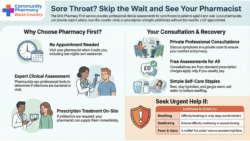
Expert Assessment: Pharmacists use a clinical tool (often the FeverPAIN or Centor criteria) to check if your sore throat is likely bacterial or viral.
-
No Appointment Needed: Simply pop in when it suits you—many pharmacies are open late and on weekends.
-
Discreet & Professional: Consultations take place in a private room, so you can discuss your symptoms comfortably.
-
Fast Relief: If the pharmacist determines you need antibiotics, they can supply them right there.
How the Service Works
The Sore Throat service is available for adults and children aged 5 years and over.
1. The Check-up
The pharmacist will ask about your symptoms. They might look at your tonsils using a torch or check for swollen glands in your neck. They are looking for specific signs, such as:
-
White spots (pus) on your tonsils.
-
A fever.
-
The absence of a cough (which often suggests a bacterial infection rather than a cold).
2. The Plan
-
If it’s likely bacterial: The pharmacist can provide a course of antibiotics.
-
If it’s likely viral: They will recommend the best over-the-counter sprays, lozenges, or painkillers to manage the discomfort while your body fights it off.
3. The Cost
The consultation is free. If you are supplied with medication:
-
Standard NHS prescription charges apply if you usually pay for prescriptions.
-
If you are exempt from charges, the treatment is free.
Simple Ways to Feel Better at Home
While you wait for your treatment to kick in, try these “self-care” staples:
-
Gargle with warm salt water: It sounds old-fashioned, but it really helps reduce swelling (not recommended for children).
-
Stay Hydrated: Sip cool or warm drinks—avoid anything too hot that might irritate the area.
-
Rest: Give your voice and your body a break.
-
Soft Foods: Stick to soups, yoghurts, or smoothies if swallowing feels tough.
When Should You Be Concerned?
While most sore throats clear up within a week, please see a pharmacist or doctor urgently if you experience:
-
Difficulty breathing or noisy breathing (stridor).
-
Drooling or extreme difficulty swallowing.
-
A “hot potato” muffled voice.
-
A high fever that won’t come down with paracetamol.
Ready to Feel Better?
Don’t suffer through the scratchiness. Visit your local pharmacy today and ask about the NHS Pharmacy First Sore Throat service. It’s the fastest way to get expert care and get on with your day.