Infected Insect Bites
Infected Insect Bites: Get Fast Help at Your Local Pharmacy
We’ve all been there—a lovely summer evening in the garden or a walk through the woods, only to wake up the next day with a bite that’s more than just a little itchy. While most stings and bites settle down on their own, sometimes they can become infected, leaving you feeling uncomfortable and worried.
If your “little bite” is starting to look a bit angry, you don’t need to spend your morning on the phone trying to get a GP appointment. Thanks to the NHS Pharmacy First service, you can walk right into your local chemist for expert help and, if needed, prescription treatment.
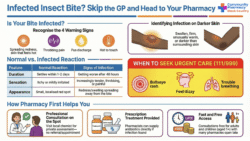
Is My Insect Bite Infected?
It’s normal for a bite to be red and itchy for a day or two. However, if it’s been more than 48 hours and the bite is getting worse rather than better, it might be infected.
Four Signs to Look For:
-
The Spread: The redness or swelling is getting larger or spreading away from the bite.
-
The Heat: The skin around the bite feels hot to the touch.
-
The Pain: It feels increasingly tender, throbbing, or painful.
-
The Discharge: You notice pus or fluid leaking from the center of the bite.
Note for Darker Skin Tones: Redness (erythema) can sometimes be harder to see on brown or black skin. Instead, look for areas that feel swollen, firm, unusually warm, or darker than the surrounding skin.
How Pharmacy First Works for You
The Pharmacy First service is designed to fit into your busy life. No referrals, no long waits—just professional care when you need it.
-
Visit Your Pharmacy: Simply head to a participating local pharmacy.
-
Private Consultation: You’ll be invited into a private consultation room to speak with the pharmacist.
-
Expert Assessment: The pharmacist will check your symptoms and medical history.
-
Treatment on the Spot: If the bite is infected, the pharmacist can provide antibiotics (like flucloxacillin or clarithromycin) directly.
-
Peace of Mind: If the pharmacist thinks you need a specialist or a doctor, they’ll tell you exactly where to go.
When to Seek Urgent Care
While your pharmacist is a skin-health expert, some reactions need immediate medical attention. Please call 111 or 999 if:
-
You have a “bullseye” rash (a red ring around a central bite), which could indicate Lyme disease.
-
You feel dizzy, nauseous, or have a high temperature/fever.
-
You experience any wheezing or difficulty breathing.
-
The bite is very close to your eye or throat.
Why Choose the Pharmacy?
-
Speed: Start your recovery today rather than waiting for a doctor’s callback.
-
Convenience: Great for busy mums and professionals—many pharmacies are open late and on Saturdays.
-
Trust: Pharmacists are clinical experts trained to recognise and treat these common infections safely.
Quick Facts
-
Service Name: NHS Pharmacy First (Infected Insect Bites)
-
Eligibility: Adults and children aged 1 year and over.
-
Cost: The consultation is free. Standard NHS prescription charges apply if you are supplied with medication (unless you are exempt).
Need relief now?
Find your nearest pharmacy using the NHS Service Search and just walk in.